Please wait...

Disaster Management Training Programme

The Disaster Management Training Programme (DMTP) plays a key role in strengthening disaster risk management capacities across DPPI SEE member states. It supports the professional development of civil protection personnel through thematic workshops, seminars, conferences, simulation exercises, and expert exchanges. The DMTP addresses priority areas in disaster preparedness and prevention, while promoting alignment with EU, UN, and other international standards and practices. Developed in close cooperation with member states, the programme fosters knowledge sharing, regional coordination, and improved interoperability in emergency situations.


-

The training was co-organised by the Ministry of Security of Bosnia and Herzegovina and the Administration of the Republic of Slovenia for Civil Protection and Disaster Relief (ACPDR) and supported by the Republic Administration of Civil Protection of the Republic of Srpska, Cave rescue unit-Ponir, Cave Rescue Service of the Republic of Slovenia (CRSS), as well as by the Mountain Rescue Service of Serbia (MRSS), Commission for Rescue in Vertical Conditions) and Croatian Mountain Rescue Service (HGSS).

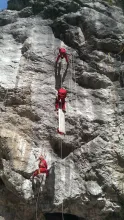
The programme is primarily aimed at volunteer speleologists of caving clubs, fire-fighters, police officers, soldiers, health workers and other interested protection, rescue and relief forces whose members have passed the speleologist’s examination or have completed equivalent national programs for independent caving activity and have sufficient experience in the field with excellent knowledge of rope technique (SRT).

The training was implemented as a combined structure of theoretical lectures and practical work given and supervised by the licensed teachers and instructors from the Training Centre for Civil Protection and Disaster Relief of the Republic of Slovenia (ACPDR). The training programme ‘’Cave Rescuer’’ is approved and signed by the Minister of Defence of the Republic of Slovenia.

This year's training was the seventh organized within the DPPI SEE framework and as part of the DPPI SEE Disaster Management Training Programme. 30 participants from eight (8) countries participated at the event (Albania, Bulgaria, Bosnia and Herzegovina, Montenegro, Croatia, Macedonia, Slovenia and Serbia).


-

This training was hosted and organised by the Administration of the Republic of Slovenia for Civil Protection and Disaster Relief and supported by the Swedish Civil Contingencies Agency. The training represents Slovenian contribution to the DPPI SEE Disaster Management Training Programme for 2015.


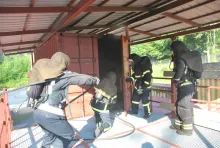
The training aimed to provide the participants with theoretical knowledge and basic practical skills in the field of fire extinguishing known as hot fire/flashover training, while also improving their existing knowledge of basic skills and techniques of fire-fighting and basic operational procedures for indoor fires. The training also intended to raise awareness on procedures and practices of fire development and behaviour in different scenarios.


​Target audience of the training were professional operational fire-fighters and commanders from the DPPI SEE member countries. Total of 15 professionals from seven (7) DPPI SEE member countries participated in the training.


The training was implemented as a combined structure of theoretical lectures and practical work given and was supervised by the licensed teachers and instructors trained by the Swedish Rescue Services Agency. The training ‘’Hot Fire Training - module A’’ is approved and signed by the Minister of Defence of the Republic of Slovenia.


More detailed information on this year’s Basic Hot Fire training can be found in the Event Report


-

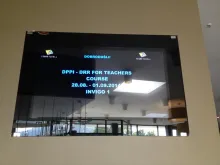
Following the success of the 2014 Disaster Risk Reduction (DRR) for Teachers course, Croatia once again contributed to the DPPI SEE Disaster Management Training Programme with a follow-up 2015 course on the same subject. The course was prepared and hosted by the Croatian National Protection and Rescue Directorate (NPRD).


DRR for Teachers Course was attended by 14 participants from 8 DPPI SEE member states (Albania, Bosna and Herzegovina, Bulgaria, Croatia, Macedonia, Montenegro, Serbia and, Slovenia) and with facilitation from Croatia (6 facilitators from NPRD, UNICEF and Croatian Red Cross).

 
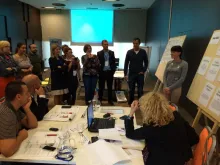
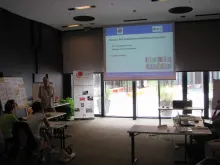
The course focused on how to include risk reduction in school curricula with basics on disaster risk reduction concepts and guidance, including the Hyogo Framework for Action (HFA) and Sendai Framework for Disaster Risk Reduction. The course aimed to relate participants’ newly acquired knowledge of disaster risk reduction in practical terms to their day-to-day work with children. The course also enabled participants to apply practice to a case study that further resulted in DRR inclusive lectures at the end of the course. Participants were divided into four groups (Outbreak, Twister, Avalanche and Volcano) and were given a task to come up with a way of including DRR related topics into geography curricula. Block/presentation evaluation was conducted on a daily basis by participants and on the last day of the course participants completed a final course evaluation form.


Conclusions& recommendations resulting from the facilitators’ meeting held at the end of the course, including the more detailed information about the course, can be found in the “Event Report_DRR for Teachers_2015”.


-

​Most of the world's population now lives in cities, with the majority living in cities of less than 500.000 people. Cities are increasingly the scenes of humanitarian crises, and this trend is likely to continue. Recent major emergencies in the region of SEE have highlighted the particular and increasing vulnerability of urban areas to disasters. Due to the floods among other consequences, water supply systems have been damaged and totally interrupted in some municipalities. In the immediate aftermath of the flooding the access to clean and safe water was hindered and threat of water-borne diseases was serious. These events have also highlighted the need for strong Urban WASH capacity in the region.

The Urban WASH in emergencies training course was co-organized by RedR UK and the Protection and Rescue Directorate of the Republic of Macedonia under the DPPI SEE Disaster Management Training Programme for the year 2014. 18 participants from 9 DPPI SEE member countries had the opportunity to learn more about the challenges for disaster response in differing urban contexts and emergency contexts and how to effectively coordinate/ collaborate and manage WASH responses in urban disasters using a multi-sector approach.


-

This year’s DPPI SEE Cave Rescue Training (6th in the row) is hosted by Sector for Emergency Management of the Republic of Serbia and represents Serbian contribution to the DPPI SEE Disaster Management Training Programme for 2014.  The training was co-organised by the Slovenian Administration for Civil Protection and Disaster Relief, Slovenian Cave Rescue Service and Serbian Mountain Rescue Service.

The aim of the training was to strengthen the human capacities of the participating countries in the field of prevention of and response to disasters, as well as to improve and further widen cooperation of national protection and rescue services of the SEE countries while practicing in accordance with the standardised cave rescue procedures.

More than 120 representatives of competent civil protection services of the DPPI SEE member countries have so far participated in the cave rescue trainings organised in the framework of the DPPI SEE.

As part of the 6th DPPI SEE Cave Rescue Training (CRT) a special (final) exercise was organised on 18th Sep 2014 in the Resava river canyon with the scenario of an evacuation on the stretcher from a deeper cave. In addition to the representatives of the training organisers, the exercise was also observed by high-level representatives of the Republic of Slovenia’s Embassy in Belgrade.


-

Following the success of the DPPI SEE Disaster Risk Reduction project that was implemented from 2009 to 2012, National Protection and Rescue Directorate of the Republic of Croatia and Administration for Civil Protection and Disaster Relief of the Republic of Slovenia organized Disaster Risk Reduction Training Course in the twining model as a joint Croatian& Slovenian contribution to the Disaster Management Training Programme for 2014 of the DPPI SEE. 

A total of eight (8) DPPI SEE member countries (16 participants) took part in this year’s course.

With support from Croatian and Slovenian facilitators, the course provided in depth orientation on disaster risk reduction concepts and guidance, including the Hyogo Framework for Action (HFA), as well as understanding of the key aspects and activities of response and recovery. The course also built upon participants’ existing knowledge base so they can relate disaster risk reduction issues in practical terms to their day-to-day work responsibilities.

More concrete aim of the course was to develop DRR related project proposal with multinational/regional implementation for the benefit of the DPPI SEE member countries.


-

Following the success of the DPPI SEE Disaster Risk Reduction project that was implemented from 2009 to 2012, National Protection and Rescue Directorate of the Republic of Croatia has organized a Disaster Risk Reduction for Teachers Training Course in a twining model. This event represents the Croatian and Slovenian contribution to the Disaster Management Training Programme for 2014 of the DPPI SEE.


The course has provided basic information on disaster risk reduction concepts and guidance, including the Hyogo Framework for Action (HFA), and in depth orientation on the Priority 3 of the HFA. The course has also built upon participants’ existing knowledge base in a way that they could relate disaster risk reduction issues in practical terms to their day-to-day work in schools and implement important information on DRR into their lectures.

 
The aim of the Course was to help teachers develop an understanding of the link between DRR and everyday lessons and give them an opportunity to practice the acquired knowledge.


The course was attended by representatives of 7 (out 9) DPPI SEE member countries (Albania, Croatia, Macedonia, Montenegro, Serbia, Slovenia and Turkey). 


The event representing Macedonian contribution to the DPPI SEE DMTP for the year 2104 was hosted and organized by the Protection and Rescue Directorate of Macedonia with support from the Operation Florian, UK. The planning process of the event itself took around 2 months and included not only all the fire chiefs in Macedonia but also all the relevant organizations responsible for road traffic safety. The Challenge itself is part of a wider national campaign that promotes road traffic safety elements and accordingly supports the UN decade for traffic safety. Representatives of 5 DPPI SEE member states (Albania, Bulgaria, Macedonia, Slovenia and Turkey) took part in the Observers Programme of the challenge.

Theaim of the Extrication Challenge was to bring together teams of rescue personnel who are committed to not only displaying their ability but also to expanding their practical skills by learning from and teaching others involved in the same field (detailed information on the challenge can be found in the (“National Road Traffic Collision Extrication Challenge - OVERVIEW”).


-

In the period between 24-31.08 rescuers from 9 DPPI SEE member states had the opportunity to train rope rescue techniques in urban areas. The event was organized by the Administration of Republic of Slovenia for Civil Protection and Disaster Relief and supported by DPPI SEE.


-


The DPPI SEE/UNSDR workshop Training of Trainers for the Implementation of the Sendai Framework was hosted and organised by Croatian National Protection and Rescue Directorate (NPRD) in collaboration with the UNISDR's Office for Northeast Asia and Global Education Training Institute (UNISDR ONEA-GETI) which was established to develop a new cadre of professionals in disaster risk reduction and climate change adaptation for disaster resilient societies under the auspices of the United Nations.


The main goal of the workshop was to increase social demand and political commitment for integrating disaster risk reduction and climate change adaptation into overall economic and social planning processes, as well as to promote the establishment of sustained human resources capacity development (pool of experts and trainers) for further adaptation and dissemination of the methodology. Target audience of the workshop were national government officials responsible for DRR.
In the course of a three-day workshop, the participants had an opportunity to gain an in-depth knowledge of Sendai Framework and practice drafting of National DRR Action Plan by using Sendai Framework indicators to assess existing risk management instruments in their respective countries. The workshop was led by Mr Sanjaya Bhatia and Ms Sarah Wade-Apicella (UNISDR ONEA-GETI) with additional expert support from Ms Natasa Holcinger (NPRD), Ms Preslava Lilova (Bulgarian Red Cross) and Mr Luca Rossi (UNISDR Europe Region Office).

Seventeen (17) participants from 9 DPPI SEE member countries successfully completed the ToT programme.


-


Administration of the Republic of Slovenia for Civil Protection and Disaster Relief (ACPDR) has organized and hosted the first training of rescuers on swift water within the DPPI SEE Joint Emergency Response Units in case of floods (JERU) project. The training was the first one conducted within the DPPI SEE JERU project, with another three SWIFT practical trainings yet to be organized in Croatia and Slovenia.


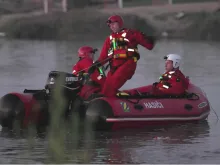
JERU SWIFT water rescue practical training took place from 10 to 15 of April 2017 in Slovenia (Solkan, Nova Gorica) and had a focus on rescuing from swift waters by using boats, swimming rescue techniques, reach and throw operational techniques and contact rescue operations.

Operational objectives of the training were:


  1. To prepare team members of national units for flood response operations in the South East Europe region;
  2. To establish effective regional cooperation and coordination of the preparedness activities in the region of South Eastern Europe in case of major floods;
  3. To enhance the participants’ knowledge about international disaster response operations;
  4. To increase the participants’ capability knowledge of water rescue techniques and tactics and tactical problem solving;
  5. To increase knowledge of water rescue techniques, tactics, tools and equipment and boat rescue techniques;
  6. To build a network among the participants by sharing the experience, existing know-how and team building.

The training was attended by 28 participants, representatives of JERU national teams from Slovenia, Serbia and Bosnia and Herzegovina.

The JERU project aims to develop operational capabilities in case of floods in the region of SEE. The overall goal of the project is to establish, equip and train the Emergency Response Units in the DPPI SEE member countries. The project initial design has been remodeled to match the other similar interventions in the region implemented under European Commission Instrument for Pre-Accession assistance - IPA in order to avoid potential duplications and ensure necessary synergies. The project envisages organization of four (4) Swift Water Rescue trainings and one final Field Exercise.


-

The field exercise RO-MODEX 2017 was hosted by IGSU (General Inspectorate For Emergency Situations of Romania) and was organized in a Consortium with National Centre APELL for Disaster Management, State Rescue Fire Service, Latvia (SFRS), Austrian Red Cross (ARC), Protection and Rescue Directorate of Macedonia, General Directorate for Civil Security and Crisis Management of France and United Nations Environment Program (UNEP).


The aim of this exercise was to give the opportunity to EU civil protection modules and teams to have a functional full-scale exercise at European level according to Union Civil Protection policies and procedures aimed to enhance knowledge on: interoperability, safety and security, self-sufficiency, procedures, coordination and learning opportunity. 


The aim of the DPPI SEE dedicated program was to give the opportunity to civil protection experts from DPPI SEE countries to observe the RO-MODEX field exercise organized under the Union Civil Protection Mechanism where they had the possibility to see interventions in exercise sites, attend coordination meetings and visit exercise management structures. 


Seven observers from (7) DPPI SEE member countries (Albania, Bulgaria, Croatia, Macedonia, Montenegro, Serbia and Slovenia) participated in the program. 


Official website of EUROMODEX -  www.apell-euromodex.eu


-

In 2020 Sphere Association and DPPI SEE initiated specific collaboration aimed at promoting the Sphere Handbook in the region of SEE by designing a suitable training program. After several basic courses on Sphere Handbook, delivered online due to COVID-19, finally we succeed to organize the first face to face Train of Trainers training in Tirana, Albania. By the end of the training 16 participants were produced as Sphere Handbook trainers. For the training we had balanced training audience with representatives from both the national civil protection authorities and the Red Cross societies, something that we are very proud for. At the end of the training each participant prepared a personal action plan describing actions that will follow and will be conducted by them promoting the Sphere Handbook as trainers. DPPI SEE will remain dedicated to their personal development growth in the future as well as building more trainers in the years to follow.


-

The course was hosted, organized and facilitated by ACPDR (Administration of the Republic of Slovenia for Civil Protection and Disaster Relief) in cooperation with NPRD (National Protection and Rescue Directorate of the Republic of Croatia).

The course provides in depth orientation on disaster risk reduction concepts and guidance, including the Sendai Framework for Disaster Risk Reduction, as well as understanding of the key aspects and activities of response and recovery. The course also guides and enables participants to prepare a DRR related group project proposal during the course to be presented at the end of the course.

Other course objectives are:


  1. Establish a common understanding of the tenets on which lie the foundations of disaster risk reduction (DRR).
  2. Develop a better understanding of preparedness, response and recovery as integral to disaster risk reduction.
  3. Illustrate the role of different stakeholders in DRR, the integrated nature between the sectors in DRR and the importance of coordination between stakeholders.
  4. Introduce and discuss the already put in place mechanisms for reducing disaster losses and risk management, focused on the region of South-Eastern Europe.
  5. Present and discuss the concepts and guidance of Sendai Framework for Disaster Risk Reduction as well as the implementation and follow-up to the strategic goals and priorities for action 2015-2030.
  6. Build a network among the participants by sharing the experience, existing know-how and team building.

The DRR course 2016 was attended by 16 participants from nine (9) DPPI SEE member countries (Albania, BiH, Bulgaria, Croatia, Macedonia, Montenegro, Serbia, Slovenia and Turkey).


-

This training was hosted by the Administration of the Republic of Slovenia for Civil Protection and Disaster Relief (ACPDR) within the DPPI SEE Disaster Management Training Programme 2016, and was co-organised/managed by the Slovenian Canine Associations (SCA) and the Association of Rescue Dog Handlers of Slovenia (ARDHS). The training is certified by the Minister of Defence of the Republic of Slovenia.

The target audience were dog handlers with rescue dogs, who are assigned to units for the search of missing and tapped persons, or who, after such training, will qualify for such units in the future, as well as representatives of civil protection and other organisations associated with search and rescue. Prior knowledge was not required.

  • Training objectives, among others, included:  
  • Understanding the basics of socialisation, education and training of rescue dogs.
  • Understanding the stages of education of rescue dogs.
  • Understanding the types and procedures of searching injured persons trapped under rubble.
  • To understand the method and procedures of searching missing persons on terrain.
  • To understand the basics of first aid and first veterinary aid.
  • To understand communication methods.
  • To understand international guidance, their application and to understand the work procedures in missions.

The training was attended by fifteen (15) participants from eight (8) DPPI SEE member countries: Albania, Bosnia and Herzegovina, Bulgaria, Croatia, Macedonia, Romania, Serbia and Turkey.


-

The training was hosted by the Macedonian Protection and Rescue Directorate within the DPPI SEE DMTP 2016 and co-organised/ managed by the Macedonian Scout Federation. 


Specific objective of the event was to connect civil protection administrations and civil society organizations while demonstrating ways to build mutual understanding, support and cooperation in the area of search and rescue operations in the nature. Through a set of interactive workshops participants had an opportunity to learn and further develop various survival techniques and to participate in a simulated crisis situation in the nature.


Targeted audience were representatives of the civil sector/ scout organizations and the SEE national disaster management authorities/ Red Cross/ Mountain rescue services respectively. 


Eighteen (18) participants from nine (9) countries (Macedonia, Serbia, Bosnia and Herzegovina, Croatia, Slovenia, Bulgaria Albania, Montenegro and Turkey) participated in the training. 


-

The 2nd event under the DPPI SEE annual training program for 2022 was dedicated to the topic of local disaster risk reduction plans/strategies and Make My City Resilient 2030. The event in Antalya was co-organized with AFAD and UNDRR office for Europe and Central Asia. During the event DPPI SEE member states had the opportunity to hear about the recent developments on the topic in Turkey and to present their own lessons from the process of designing local DRR strategies. During the second day we had the opportunity to learn more about MCR 2030 and hear real case studies from cities in the region who are already involved in the campaign. Under the Croatian chairmanship for 2022 with DPPI SEE, the topic of our annual training program is DRR. Our last event in the program for this year will happen in October in Dubrovnik, Croatia when we will discuss DRR financing.


-

The training held in Belgrade was a continuation of the basic training on PDNA that was conducted in Sarajevo in February 2020. This time and thanks to the collaboration with the UNDP regional office in Istanbul, the training focused on building future trainers on PDNA in the region of SEE. A three-day training program included presentations as per the PDNA training modules, as well as interactive lectures, case studies, group exercises and practical analysis. The training informed designated civil protection representatives from the DPPI SEE member states about the advantages of applying standardized approach and methodology to conduct post disaster needs assessments and formulate recovery strategy. This year DPPI SEE and UNDP are collaborating on another activity as well and that is the preparation of the recovery capacity assessment for the DPPI member states, aiming to support disaster management and recovery planning process more effectively.


-

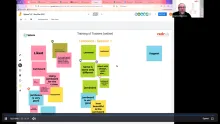
Sphere and DPPI-SEE initiated a Train of Trainer programme in January 2020.This was followed by three online Sphere courses held between June and November 2020. These workshops were led by listed Sphere trainers Zeynep Sanduvac (Turkey) and Dijana Muzicka (Bosnia and Herzegovina) and co-facilitated by Tristan Hale and Aninia Nadig (Sphere secretariat). In November and December 2021, sixteen of the graduates attended a 24h online course in online facilitation techniques, facilitated by Red-R UK. This training was a follow up to the previous one and was meant for those who have prior experience of at least 4-5 years in conducting trainings in humanitarian setting, basic understanding of the contents of the Sphere Handbook with discrete role in their current job responsibilities. Overall, fifteen (15) participants (6 female, 9 male) attended and successfully completed the course. Participants came from nine (9) countries (Albania, Bosnia and Herzegovina, Bulgaria, Croatia, Montenegro, N.Macedonia, Romania, Serbia and Turkey). They represented civil protection organizations, Red Cross/Red Crescent societies and the Sphere office.