Please wait...

Disaster Management Training Programme

The Disaster Management Training Programme (DMTP) plays a key role in strengthening disaster risk management capacities across DPPI SEE member states. It supports the professional development of civil protection personnel through thematic workshops, seminars, conferences, simulation exercises, and expert exchanges. The DMTP addresses priority areas in disaster preparedness and prevention, while promoting alignment with EU, UN, and other international standards and practices. Developed in close cooperation with member states, the programme fosters knowledge sharing, regional coordination, and improved interoperability in emergency situations.


-

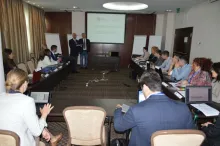
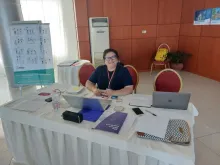
The Risk Assessment Workshop that happen in Belgrade this week, was the first event for 2022 under the Disaster Management Training Program. It was a contribution of the Ministry of Interior of Republic of Serbia – Sector for Emergency Management to the program itself with a goal to exchange updates and novelties on the topic. Despite the host country, disaster risk assessment experts from Albania, Bosnia and Herzegovina, Croatia, Montenegro, North Macedonia, Romania, Slovenia and Turkey had the possibility to present key elements of their national risk assessments and future plans. At the workshop, we also had representatives from UNDRR who presented the results from the Risk INFORM Index for SEE and the Make My City Resilient 2030. At the end of the workshop, the experts agreed that a permanent working group within DPPI SEE should be established that will meet regularly and on annual basis to discuss and share information on disaster risk assessment processes and challenges.


All major emergencies that happened in the context of South Eastern Europe in the last 10 years (Serbia/Bosnia and Herzegovina Floods, Refugee and Migrant Crisis, Earthquakes in Albania, Croatia and Turkey, COVID-19) have showed the importance of the logistics aspects in response operations. In 2021 DPPI SEE, the Global Logistics Cluster and the IFRC initiated discussions on the modalities how to better identify needs and gaps in knowledge in the member states on the topic of logistic preparedness. The result of that consultation process was designing LOGEX 2021 as a discussion based simulation exercise on the topic of logistics in emergencies. During the exercise the participating states will have the opportunity to work on a fictitious scenario happening in a fictitious country affected by a massive earthquake. Their focus will be only logistics aspects of the response like preparing the response plan, transportation and warehousing aspects. The assumption is that by doings we will identify lessons which will be the basis for identification and design of a comprehensive training program to be implemented by DPPI SEE in the years to follow. LOGEX 2021 starts on 22.11 simultaneously in all 10 DPPI SEE member states in an online format. 


-

Disasters and complex emergencies often result in significant environmental impacts. Therefore, a key element of emergency response is the rapid identification and mitigation of environmental risks. The United Nations Environment Programme (UN Environment) / United Nations Office for the Coordination of Humanitarian Affairs (OCHA) Joint Environment Unit (JEU) was established in 1994 to coordinate international response to environmental emergencies whenever international assistance is requested by affected countries. The JEU can deploy environmental experts and equipment, conduct rapid environmental assessments, and provide remote support. Depending on the type of emergency and requested assistance, the experts can be deployed as part of United Nations Disaster Assessment and Coordination (UNDAC) teams or on standalone environmental emergency missions.

The Environment and Emergencies Training (EET) is organized by the JEU in partnership with DPPI SEE and the Protection and Rescue Directorate of North Macedonia as the host organization. The course builds upon the introductory sessions on environment and emergencies integrated in UNDAC Induction and Refresher courses. The training provides participants with knowledge, skills and understanding of potential environmental impacts caused by disasters and of how to apply relevant tools and approaches to minimize negative impacts to human health, livelihoods and the environment. 


-

In cooperation with the World Bank, EU and UNDP, DPPI SEE hosted the regional training workshop on Post Disaster Needs Assessment in Sarajevo, Bosnia and Herzegovina. Post Disaster Needs Assessment (PDNA) is a methodology designed to assist the affected communities in their recovery process. The idea behind the training was to familiarize the participants with the concept and with that to contribute to the processes of pre disaster recovery planning. DPPI SEE member states have already experienced the process of PDNA with the floods in Bosnia and Herzegovina and Serbia, floods in North Macedonia and the recent earthquake in Albania and the training was built around those experiences. The ultimate goal of the training was to expand the pool of regional experts in PDNA, invest in their skills in knowledge on long term basis and use them in real time situations. 


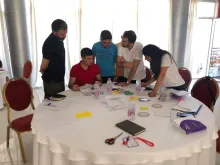
This week under the framework of our annual training program we have initiated the SPHERE online training. Something that was originally planed as 5 day training course will now be completely online  and stretched in the next 4 weeks. The aim of the training is to spread the message on SPHERE humanitarian charter and minimum standards across the region and work on creation of a pool regional trainers. Total number of 22 participants representing civil protection authorities but also Red Cross are braking the ice in this new way of doing business.

The week one workshop objectives were:

Learn some SPHERE basics, including its history, structure, philosophy, and reasons for its existence. Discover why humanitarian standards exist.
Find information in the SPHERE Handbook.Define Quality, Accountability, and Inclusion in the context of humanitarian response.
Get used to various interactive learning technologies, including Zoom and Miro. Start to get to know each other as a group. Establish a collaboration tool (MS Teams) to continue discussions
between workshops. 

The overriding objective was to prepare ourselves for the deeper content-based learning that's coming next.


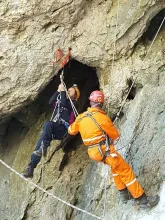
This weekend we started with the Cave Rescue Training in Sezana, Slovenia. Total number of 17 participants representing 8 DPPI SEE member states are attending the training. The Cave Rescue Training is one of the traditional trainings that are running in our program in the last 10 years and is the first one this year that is organized with physical presence. Many thanks to the Administration for Civil Protection and Disaster Relief of Republic of Slovenia and their Cave Rescue Team for organizing the training.


Keeping up-to-date with online training techniques is essential in Covid times for DPII SEE. This is why together with Sphere we started the training in online facilitation techniques . At the end of Day one on 15.11 the 19 participants from Albania, Bulgaria, Montenegro, Serbia, Romania, Slovenia, Turkey, North Macedonia, Croatia and Bosnia Herzegovina were unanimous - they loved the virtual whiteboard! Looks like JamBoard will be getting some use in future Sphere facilitations in South Eastern Europe!


-

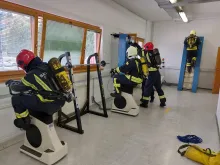
This event was a contribution of the Administration for Civil Protection and Disaster Relief of Republic of Slovenia to our annual training program. Total number of 16 firefighters from 8 DPPI SEE member states had the opportunity to train various fire suppression techniques, to exchange and to learn from each other. The Training Center in Ig, Slovenia offered excellent working conditions to meet the learning objectives. This is one of our traditional trainings that we are having in our program and one of the most appreciated by the participants.


-

The training course was the second in the cycle of courses organised by the Croatian National Protection and Rescue Directorate for fire-fighting commanders from Bosnia and Herzegovina, Montenegro and Macedonia. 

The main objective of the course was to provide an insight into the technical rescue operations in fire-fighting interventions related to road accidents, both through theoretical lectures and practical exercises.

At the end of the course, the participants (twenty-eight in total) received certificates for having been trained in “Operational Activities in Road Accidents”

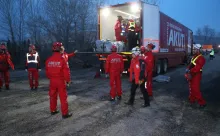
The participants were made familiar with the equipment used in interventions in road accidents; with security measures, application of various rescue methods, ensuring working conditions in special conditions (by night), tactical activities in accidents involving dangerous goods, and generating safety and protection guidelines.


-


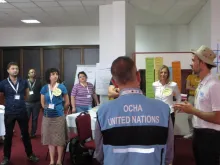
PREP training course was hosted by the Macedonian Protection and Rescue Directorate as part of the DPPI SEE DMTP 2016 and was co-organised/ managed by the United Nations Office for Coordination of Humanitarian Affairs (OCHA), Emergency Services Branch (ESB). The course came a result of discussions between UN OCHA and DPPI SEE over the course of 2015 and 1st quarter of 2016, following the proposal of UN OCHA for a PREP course tailor-made to SEE. This was only the 2nd in the row of PREP courses designed and conducted by the OCHA Emergency Service Branch. 


The aim of the course was to reach out to emergency management practitioners from different organisations of the DPPI region and present key concept and tools used and promoted by OCHA Emergency Services Branch in responding to humanitarian crisis. 


Over the course of 5 days, the participants were lectured on fundamentals of humanitarian action and humanitarian coordination, humanitarian Civil-Military coordination (UN-CMCoood), including on OCHA’s emergency response tools and services. The course was structured in a way as to ensure constant balance of theory, follow-up group discussions, presentations, team-building, all culminating in practical application through task solving in an exercise simulating a sudden-onset emergency.


The course was attended by twenty-six (26) participants, out of which sixteen (16) participants represented the DPPI SEE (Albania, BiH, Bulgaria, Croatia, Macedonia, Montenegro, Serbia, Slovenia and Turkey) with another ten (10) participants having been selected by UN OCHA Emergency Service Branch network (European Commission (DG ECHO), Belgium, Italy, Germany and Sweden). In order to prepare ahead for the course, all the participants had to complete the pre-course training, comprising 4 on-line exercises, over 1 month before the course. 


More detailed information about PREP 2016 can be found on the course website:

https://sites.google.com/a/dialoguing.org/prep/home/highlights/struga2016 


-


Disaster Risk Reduction for School Principals Course was the Croatian contribution to prevention/disaster risk reduction courses organized within the DPPI SEE Disaster Management Training (DMTP) Program for 2016. The course was hosted and led by the National Protection and Rescue Directorate (NPRD).


The course was attended by 16 participants from 8 DPPI SEE member states (Albania, Bulgaria, Croatia, Macedonia, Montenegro, Serbia, Slovenia and Turkey) and with facilitation from Croatia (4 facilitators from NPRD and UNICEF) and guest facilitators, last year’s attendee, principal Biljana Ćulafić from Montenegro. All together 21 participants participated in the course (List of participants is annexed to this report).


The 4 and half day focus on inclusion of reducing risks in school activities with basics of responding to and recovering from disasters specific to the region of South-Eastern Europe. The course provided basics on disaster risk reduction concepts and guidance, including the Hyogo Framework for Action (HFA) and Sendai Framework for Disaster Risk Reduction (SFDRR), as well as understanding the key aspects and activities of response and recovery. The course builds upon participants’ newly acquired knowledge of disaster risk reduction issues in practical terms to their day-to-day work with children and teaching staff. The course also allowed participants to apply practice to a project, case study or a simulation exercise culminating in a lecture or a presentation of the project at the end of the course.


-


The training was a joint contribution of Romania and Slovenia to the Disaster Management Training Programme (DMTP) 2016 and was co-organized by the General Inspectorate for Emergency Situations of Romania (GIES) and the Administration of the Republic of Slovenia for Civil Protection and Disaster Relief (ACPDR) and supported by the Cave Rescue Romania (SALVASPEO) and Cave Rescue Service of the Republic of Slovenia (CRSS).


The training is primarily aimed at volunteer speleologists of caving clubs, fire-fighters, police officers, soldiers, health workers and other interested protection, rescue and relief forces whose members have passed the speleologist’s examination or have completed equivalent national programs for independent caving activity and have sufficient experience in the field with excellent knowledge of rope technique (SRT)


​This year's training was the eight organized within the DPPI SEE framework and as part of the DPPI SEE Disaster Management Training Programme. 20 participants from nine (9) countries participated at the event (Albania, Bulgaria, Bosnia and Herzegovina, Croatia, Montenegro, Romania, Slovenia, Serbia and Turkey). At the end of the course State Secretary Mr. Viorel LASCU, the Ministry of Environment, Waters and Forests of the Republic of Romania addressed the participants and Mr. Marius DOGEANU, head of department, International Relations, General Inspectorate for Emergency Situations and Ms. Iulia NITU, International Relations department, the General Inspectorate for Emergency Situations handed out the certificates.


-

The seminar was hosted by the Sector for Emergency Management of the Serbian Ministry of Interior and was the last of the activities organised within the DMTP 2015 annual plan. 


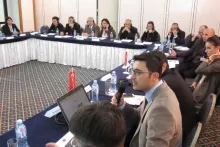
Views and country experiences on the seminar topic were exchanged on two consecutive days among forty-one (41) participants (25 Serbian representatives, in addition to 15 in total from Albania, B&H, Bulgaria, Macedonia, Montenegro, Slovenia and Turkey). The seminar target audience were experts of 112 system/ ministries/ agencies involved in early warning system management and information-gathering and experts in hydrology and meteorology. 


Presenting at the seminar, next to the DPPI SEE member countries official delegations, were the guest speakers from the Republic Hydro-meteorological Service of Serbia, Serbian National Water Management Directorate, the Public Water Management Company “Serbia Waters”, Serbian Institute for the Development of Water Resources “Jaroslav Černi” and others. Topics addressed included the following: Set up of Early Warning System (Devetra system development - presented by a guest speaker from CIMA Research Foundation, Early Warning - hydrological and meteorological phenomena, Early Warning for wildfires (cross-border cooperation), Early warning for hazardous hydrological risks at local level, etc. Sessions reflecting on the seminar presentations were an integral part of the seminar agenda.


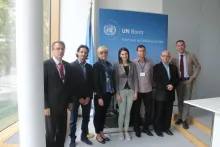
This week UNDRR office in Bonn is organizing training workshop on Sendai Framework Monitoring and Disaster Loss Databases. This is the 2nd time since last year that UNDRR is organizing such events aimed to build capacities of partners for the process of Sendai Monitoring. On both occasions, last year and this week, DPPI SEE has supported the workshops with sending representatives from the member states. This time experts from Bosnia and Herzegovina, Bulgaria, North Macedonia and Serbia are present in Bonn to learn and liaise with their colleagues across the globe and contribute to the debate of Sendai Monitoring.


-

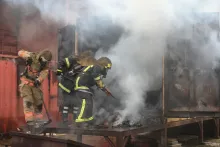
This week 16 firefighters representing 9 DPPI SEE member states are in Ig, Slovenia for the Basic Hot Fire training as part of the annual contribution of the Administration for Civil Protection and Disaster Relief of Republic of Slovenia to this year DPPI SEE training program. This training is aimed to improve the participants’ basic knowledge and techniques of fire-fighting and basic operational procedures for indoor fires. The course was also designed to raise awareness on procedures and practices of fire development and behavior in different scenarios.During the week the participants were exposed to theoretical lessons and various practical exercises supervised by licensed trainers and instructors.


-

DPPI SEE Head of Secretariat participated at the 2nd Leadership Meeting of the Southeastern European National Red Cross Red Crescent Societies that was held in Sofia during 04-05.06.2019. 

The Leadership Meeting promotes cooperation between Red Cross Red Crescent National Societies in the region of Southeastern Europe, and in particular strives to enhance the quality and effectiveness of coordinated disaster and crisis preparedness and response. During the meeting the concept Neighbors Help First was discussed with specific actions that will be taken in the next period. DPPI SEE Head of Secretariat used the opportunity to present the Initiative its structure, activities and future plans. Possibilities for future cooperation between Neighbors Help First network and DPPI SEE were discussed as well.


-

From the 18-21.09.2018 DPPI SEE member states had to opportunity to participate at this year INSARAG team leaders meeting hosted by the Romanian General Inspectorate for Emergency Situations in collaboration with Office for the Coordination of Humanitarian Affairs (OCHA) in its capacity as the INSARAG Secretariat. Experienced USAR practitioners as well as USAR Team Leaders from all over the world working on Urban Search and Rescue (USAR) had the opportunity to exchange on the latest developments in INSARAG. DPPI SEE participants have use the meeting to learn more about the certification process and to network with colleagues. Within DPPI SEE, Romania and Turkey are the only countries with INSARAG certified teams. Their expertise and knowledge of the certification process can be used by the other member states who are considering building such a capacity. DPPI SEE remains devoted to the mission of enhancing disaster preparedness capacities in the region.


This week DPPI SEE Head of Secretariat is joining over 3500 delegates from 150 countries at the Global Platform for Disaster Risk Reduction in Geneva, Switzerland.

The aim of the meeting is to assess the progress on Sendai Framework implementation. During the meeting the Global Assessment Report for 2019 was launched describing the state of risk across the globe highlighting what's new, spotting emerging trends, reveling disturbing patterns, examining behavior and presenting progress in reducing risks. All DPPI SEE member states are participating at the 

event showing their grate commitment to the cause.


Envisaged with the DPPI SEE Annual Work Plan for 2019, Project Development Working Group had its first meeting on the 27.05 in Zagreb, Croatia. The meeting was used to  identify the scope of the working group and decide upon the working methodology that will be used. 17 participants in total from all DPPI SEE member states contributed to the meeting sending clear message that project development is something that can bring closer the member states and enhance working relations. By having both EU and non EU member states within DPPI SEE, the working group is excellent tool to be utilized for mutual cooperation, shearing best practices in project development and growing together as a region. 

DPPI SEE Secretariat will serve as a contact point for the working group and will facilitate further discussion among the member states on the topic.