Background
Disasters affect the development all around the world and this makes disaster management one of the most important topics of the governments all over the globe. Between 2002 and 2011,  there were 4.309 disasters recorded, resulting from natural hazards around the world where 1.124.854 people perished and a minimum of 1.313 billion USD was recorded in losses. In the year 2011 alone, 365 disasters claimed 33.760 lives; affected 206 million people and inflicted damages worth an estimated 366 billion USD.
In order to manage the disasters effectively at all phases from disaster risk reduction to recovery, the direct, indirect and secondary effects of the disasters should be assessed in detail. All these effects are directly related to the economic growth of the affected country, mostly as an economic loss in the short run and rarely as an economic gain opportunity in the long run.
On the other hand, there is a wide range of funds and financial resources that the stakeholders can benefit from during the disaster management process especially for disaster reduction projects and disaster relief operations. Furthermore, the disaster insurance that bears the cost of losses and damage caused by the disasters can/would have an important economic effect for the country in the recovery period.
Seminar Objectives
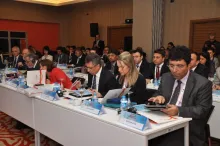
The Symposium was hosted by Disaster and Emergency Management Presidency of Republic of Turkey (AFAD) and was organized in cooperation with Economic Cooperation Organization (ECO) and Disaster Preparedness and Prevention Initiative for South Eastern Europe (DPPI SEE).
In this symposium, in order to form an economic view of disasters, all the following issues were covered: economic effects of disasters, sustainable development, pre-disaster finance, disaster insurance and financial resources for disaster management.
The symposium aimed to:
- Inform the participants about the economic effects of disasters and the relationship between disasters and sustainable development.
- Raise the awareness about the importance of pre-disaster finance especially the disaster insurance.
- Enlightened the participants about the financial resources for disaster management and emergency relief.
- Provide the participants with an opportunity to come together to create a network, to share experience, exchange know-how and learn different implementation methods.
Target Audience and Methodology
An international arena was created with participation of disaster management and finance experts and economists from 20 countries and Turkey as a bridge country between Europe and Asia. Academicians, representatives of UNDP, UNISDR, UN OCHA, Swiss Re, Turkish DASK, World Bank, Islamic Development Bank, European Union, public sector, private sector and NGO’s were invited as lecturers. Also, the representatives of other regional organizations were invited as observers.
Language
The language of the symposium was English and no translation was provided. Working documents and handouts were also distributed in English.
About the Co-organizer
Economic Cooperation Organization (ECO) is an intergovernmental regional organization established in 1985 by Iran, Pakistan and Turkey for the purpose of promoting economic, technical and cultural cooperation among the Member States.
In 1992, the Organization was expanded to include seven new members, namely: Islamic Republic of Afghanistan, Republic of Azerbaijan, Republic of Kazakhstan, Kyrgyz Republic, Republic of Tajikistan, Turkmenistan and Republic of Uzbekistan.
Over the past 12 years the member states have been collaborating to accelerate the pace of regional development through their common endeavors. ECO has embarked on several projects in priority sectors of its cooperation including energy, trade, transportation, and agriculture and drug control.
Under the Directorate of Human Resources & Sustainable Development, the natural disaster management issue is covered.
Presentations:
- Emerging definitions and perspectives from practices NATURAL DISASTERS Economics and Development
- Economic Effects of Disasters
- New approaches to disaster risk financing: the role of insurance
- Disaster economics and governance of risks: investing today for a safer tomorrow
- Catastrophes and Insurance Lessons, Challanges and Trends
- The World Bank’s Disaster Risk Management Policy Building a Safe and Resilient Future for All
- INTERNATIONAL ECO SYMPOSIUM ON DISASTER ECONOMICS 3-5 April 2013
- Business Disaster and CSR april 2013
- Development and Recovering From Disaster
- The Economics of “Natural” Disasters
- EU's Financial Support for Disaster Management and Preparedness
- JICA’s direction and challenge on Disaster Risk Management
- Disaster Recovery Planning as a Means to Resilient Development
- Financial resources for disaster relief operations
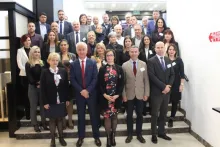

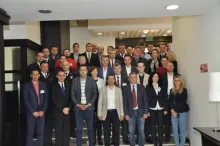

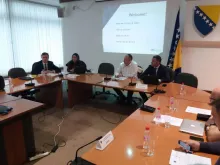
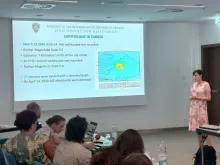
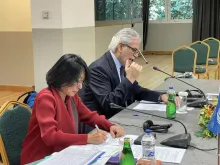
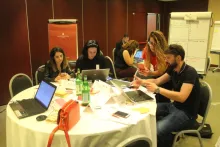
 During 05-06.03.2019 DPPI SEE Secretariat hosted the first event from the annual Disaster Management Training Program in Sarajevo, Bosnia and Herzegovina. Together with UNISDR Europe office, training workshop has been conducted on Sendai Framework Monitoring process. Total number of 17 participants from all DPPI SEE member states had the opportunity to learn about the recent developments related with Sendai Framework Monitoring process, to exchange on their national experiences and to practice some of the online training tools available for Sendai Framework Monitoring. Detailed report on the workshop together with all the presentations from the training workshop will be uploaded on our web page in the following days. DPPI SEE Secretariat express its gratitude to the Ministry of Security of Bosnia and Herzegovina - Sector for rescue and protection for their support in organizing this event.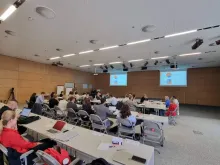

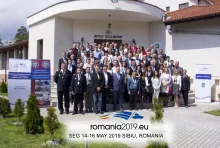
 Last week representatives from DPPI SEE member states had the opportunity to participate at the Seminar on the application of the SEVESO III Directive for underground storage of natural gas in Sibiu, Romania. The event organized by the Romanian General Inspectorate for Emergency Situations and under the auspices of their Presidency with the Council of the European Union. Topics on underground storage and distribution of natural gas, production and storage of biogas and LNG-bunkering, storage and distribution were covered. At the second day of the seminar the participants visited ROMGAZ Information and documentation center in Medias and observed practical implementation of SEVESO III.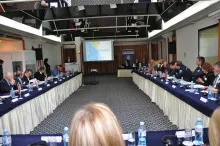
 The seminar was hosted by the Sector for Emergency Management of the Serbian Ministry of Interior and represents Serbian contribution to the DPPI SEE Disaster Management Training Programme for the year 2017.
  Target Audience were professionals engaged in awareness raising on the seminar topic as well as the SEE civil protection experts responsible for development and monitoring of the impelmenation of national emergency response plans.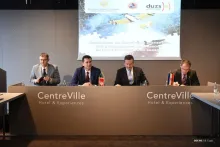
 The Conference on forest fires prevention and preparedness was heldon 22-23 February 2018 in Podgorica (Montenegro). Conference was organised within the DPPI SEE Disaster Management Training Programme (DMTP) and represents Montenegrin contribution to the Programme for the year 2018. The Conference was host by the Ministry of Interior – Directorate for Emergency Management of Montenegro, and co-organised with the National Protection and Rescue Directorate of the Republic of Croatia.
 The target audience was directors-general/Heads of the National emergency management/civil protection authority and experts in the field of fire protection or civil protection in DPPI SEE member countries and wider.
 In accordance with agenda participants from Montenegro and above mentioned DPPI SEE member countries, Italian Civil Protection Department and DG ECHO – Directorate-General for European Civil Protection and Humanitarian Aid Operations presented issues relating to prevention and preparedness for forest fires as well as an exchanged views and discussed about response capacities, experiences and lessons learnt from fire season 2017 with focus on strengthening on regional cooperation.

 Based on the invitation from the General Inspectorate for Emergency Situations (GIES) to the Member States of Disaster Pareparedness and Prevention Initiative for South Eastern Europe (DPPI SEE), representatives of DPPI SEE together with a delegation of GIES attended the International Conference on Environmental Legislation, Safety Engineering and Disaster Management - ELSEDIMA, in Cluj Napoca, 17-18 May 2018.
 This activity represented Romania's contribution to 2018 Disaster Management Training Program under DPPI SEE, attended by 11 representatives from Albania, Bosnia Herzegovina, Bulgaria, Macedonia, Montenegro, Romania and Head of the DPPI SEE Secretariat .
 GIES leadership has been represented by First Deputy General Inspector - Colonel Daniel Marian DRAGNE and Lieutenant Colonel Rareş PETRE, European Affairs, Assistance and International Relations Service, responsible officer for DPPI SEE cooperation.

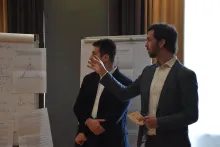
 DPPI SEE and IPA DRAM partner countries came to Ljubljana this week to discuss the possibility for sustainability of results upon the end of IPA DRAM in November 2019. IPA DRAM has identified five main areas in which the programme results can be sustained and at the same time contribute to the strengthening of DPPI SEE. Those five areas are:
 For the purpose of this workshop the organizational comparative advantage methodology was used. This methodology facilitates the process of performing systematic analysis of internal and external factors that affect an organizations ability to take new task,projects or objectives as well as identifying the resources that would be required should the
  By working in 3 groups participants of the workshop have analyzed all of the 5 recommended IPA DRAM results. The report which will be the outcome from the workshop will include the findings of the analysis and will draft recommendations to be taken under consideration during the upcoming 38.DPPI SEE Regional Meeting in Tirana (16-17.04.2019).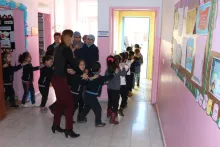
 The event was hosted and organized by AFAD (Republic of Turkey Prime Ministry Disaster and Emergency Management Authority) with an objective to facilitate better understanding of DRR in the scope of “Safe School” initiative and illustrate the role and interoperability of different stakeholders (Ministries of Education, Disaster and Emergency Management Authorities of the SEE in application of DRR measures in a safe environment (e.g. schools).
 The purpose of the two-day discussion platform was to provide the opportunity for information and experience sharing on DRR activities undertaken / to be undertaken under the “Safe School” Initiative. At the same time, by visiting an educational institution in the scope of “Safe School”, the event allowed participants to observe if the objectives of Hyogo Framework for Action (HFA) and Sendai Framework for Disaster Risk Reduction (SFDRR) had been achieved.
  “Disaster Prepared School Campaign” activities taken in the scope of “Safe School”. The role and interoperability of different governmental institutions and measures taken for structural retrofitting in schools were described by the Republic of Turkey Ministry of National Education, while Istanbul Project Coordination Unit (IPCU) created under İstanbul Provincial Special Administration presented the “Istanbul Seismic Risk Mitigation and Emergency Preparedness Project (ISMEP)”.