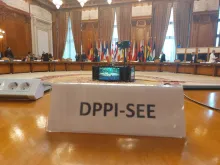
The conference in Bucharest was the 1st event in DPPI SEE training program for 2023. Hosted by the Department for Emergency Situations of Republic of Romania, the event focused on the importance of risk information as foundation for effective disaster risk reduction. Trusted, accurate and widely used risk information saves lives, particularly when it reaches ‘the last mile’ and is put into practice to protect vulnerable communities, goods and systems. It is crucial that risk information is understandable and accessible to anyone who would use it, and addresses the systemic, cascading, and compounding, nature of risk – so that it may build societal resilience. Total number of 17 participants were supported by DPPI SEE and took active participation in both the technical session and the high level round table on the 24th February. The conference was also used for many bilateral meeting pushing forward the agenda for disaster risk reduction in Europe.

Disaster Management Training Programme
The Disaster Management Training Programme (DMTP) plays a key role in strengthening disaster risk management capacities across DPPI SEE member states. It supports the professional development of civil protection personnel through thematic workshops, seminars, conferences, simulation exercises, and expert exchanges. The DMTP addresses priority areas in disaster preparedness and prevention, while promoting alignment with EU, UN, and other international standards and practices. Developed in close cooperation with member states, the programme fosters knowledge sharing, regional coordination, and improved interoperability in emergency situations.
-
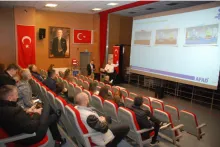
The objective of the seminar was to share practical examples on business continuity planning and critical infrastructure protection in context of disaster management. During the days of the seminar member states had valuable exchange on industrial accidents prevention and discussed options for future collaboration. Each country contributed by making a presentation to the seminar attended by representatives of 9 DPPI member countries, including Türkiye. The opening speeches of the seminar were made by Ercan AKAR, İstanbul AFAD Provincial Director and Gökhan YILMAZ, Head of AFAD Presidency Risk Determination and Prevention Department. Country representatives also visited the İstanbul Provincial AFAD Training Center and a briefing on disaster education was made by the center director. During the visit the participants had the chance to see the earthquake simulator, observe a flood simulation and visit the rescue dogs training center.
-
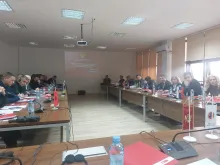
The last event under Disaster Management Training Program for 2022 was held in Podgorica, Montenegro on the topic of civil protection training centers. The workshop was held in the newly established civil protection training center and this was the first international event held there. Opening of the training center in Podgorica is yet another important achievement of the Protection and Rescue Directorate of Montenegro and the workshop was used to exchange on existing structures of similar nature in the other member states, programs that are taking place in their training centers and what are the modalities for collaboration between the various training centers. The conclusions from the workshop which will be presented to the next DPPI SEE Regional meeting are that Disaster Management Training Program can be used further more to promote the work of the existing training centers of the member states and second, creating an online library within DPPI SEE on topics relevant for the training centers will be useful to have.
-
Cave rescue Training - 2013 was jointly organized by Croatian mountain rescue service - Commission for speleological rescue with the support of the Croatian National Protection and Rescue Directorate and by Cave rescue Service of Slovenia in the frame of DPPI SEE.
This training was already the fifth in the row. The first training was organized in 2009 in Montenegro, then in 2010 in Macedonia, in 2011 in Bulgaria and in 2012 in Slovenia. All together there were more than 100 participants from DPPI SEE member countries trained in cave rescue techniques.

Slovenian cave rescue service and Croatian mountain rescue service made an important in 2012 by applying for European funds whereby these were awarded the funds for the implementation of the European project EU Proteus (ending in December 2013. Within the project PROTEUS a large-scale exercise PARADANA 2013 was carried out in Slovenia (August 2013). In this exercise all civil protection units worked together in a scenario of an accident that occurred in the cave deep about five hundred meters. Also 150 caving rescuers from Slovenia and Croatia were participating in the exercise. The evaluators assessed the exercise as a very well implemented.
The DPPI SEE Cave rescue training was attended by 20 (twenty) cavers from: Albania, Bosnia and Herzegovina, Bulgaria, Croatia, Macedonia, Montenegro, Romania, Serbia, Turkey and Slovenia.
Responsible instructors: Ales Cedilnik and Marko Zibelnik from Training center for civil protection and disaster relief of Slovenija; Walter Zakrajšek , Aleš S. Stražar, Marko Erkar and Bernard Štiglic from Cave rescue service of Slovenia and Ljubo Majica and Ivica Ćukošić of Croatian mountain rescue service .
-
This training was hosted and organised by the Administration of the Republic of Slovenia for Civil Protection and Disaster Relief. The venue of the training was the Training Centre for Civil Protection and Disaster Relief, Unit Sežana (TC), Slovenia. The training represented Slovenian contribution to the DPPI SEE Disaster Management Programme 2012.
Training objectives
During the 8-day training there were 80 hours of various lessons, which took form of lectures, short demonstrations and practical work in smaller caves for consolidation of knowledge and bigger final exercise of the cave rescue activities.
Training was based on various practical exercises and theoretical knowledge, which were necessary for successful rescue activity and even for the prevention of accidents in the caves.
Extract from contents:
- Cave conservation;
- Single rope technique – Alpine style;
- Procedures for accident in the cave;
- Examination of the victim;
- Setting up of evacuation and transport systems and learning rescue manoeuvres;
- Preparation and evacuation of a victim/stretcher;
- Planning cave rescue and importance of exercise/rescue analysis;
- Setting up rescue units for international intervention;
- Presentation of various specialties inside the rescue services.
Target audience
The programme was primarily aimed at volunteer speleologists of caving clubs, fire-fighters, police officers, soldiers, health workers and other interested protection, rescue and relief forces whose members had passed the speleologist’s examination or had completed equivalent national programmes for independent caving activity and have sufficient experience in the field with excellent knowledge of rope technique (SRT). All participants had to demonstrate in practice on the first day of training that they have the required level of knowledge.
Methodology
The training was implemented as a combined structure of theoretical lectures and practical work given and supervised by the licensed teachers and instructors from the Training Centre for Civil Protection and Disaster Relief of the Republic of Slovenia (ACPDR). The training programme ‘’Cave Rescuer’’ is approved and signed by the Minister of Defence of the Republic of Slovenia.
-
The training was conducted at the Training Centre for Civil Protection and Disaster Relief in Ig near Ljubljana (Slovenia) and it was hosted by the Administration of the Republic of Slovenia for Civil Protection and Disaster Relief and supported by the Swedish Civil Contingencies Agency.
The training represented Slovenian contribution to the DPPI SEE Disaster Management Training Programme 2011. Training objectives At the training the participants gained theoretical knowledge and basic practical skills in the field of fire extinguishing, known as hot fire/flashover training. The training therefore improved the participants’ knowledge of basic skills and techniques of fire-fighting and basic operational procedures for indoor fires. Generally the training also intends to raise awareness on procedures and practices of fire development and behaviour in different scenarios. Target audience The training was intended for professional operational fire-fighters and commanders from the DPPI SEE countries (1-2 per country).
It was attended by representatives of Albania, Bosnia and Herzegovina, Bulgaria, Croatia, Macedonia, Montenegro, Serbia, Romania and Turkey Methodology The training was implemented as a combined structure of theoretical lectures and practical work given and supervised by the licensed teachers and instructors who were trained by the Swedish Rescue Services Agency. The training ‘’Hot Fire Training - module A’’ is proved and signed by the Minister of Defence of the Republic of Slovenia.
-
The course was organised within the DPPI SEE/ Capacity for Disaster Reduction Initiative (CADRI)/ Swedish Civil Contingencies Agency (MSB) DRR project (Phase II) and hosted by Croatian National Protection and Rescue Directorate. The course at the same time represented Croatian contribution to the DPPI SEE Disaster Management Training Programme 2011. The aim of the course was to strike a balance between presentation skills and other aspects of training course management, from the preparation of material to running exercises; and from training needs analysis to evaluation of training, including review of training events. The event was part of capacity development project supported by CADRI and MSB aimed at supporting the development of disaster risk reduction capacity at all levels
- governments and organizations
- in the South Eastern Europe region in order to improve their ability to better understand and manage the variety of disasters faced by the region.
The training course was attended by representatives of national emergency management authorities and Red Cross Societies of Bulgaria, Croatia, Macedonia, Romania, Serbia, Slovenia and Turkey.
-
The training was organised by the Bulgarian Federation of Speleology and Bulgarian Cave Rescue Unit, Chief Directorate Fire Safety and Civil Protection of the Ministry of Interior of Republic of Bulgaria and supported by the Administration of the Republic of Slovenia for Civil Protection and Disaster Relief (ACPDR), Ministry of Defence of the Republic of Slovenia. The training represented Bulgarian contribution to the DPPI SEE Disaster Management Training Programme 2011
Training objectives
During the 8-day training there were 80 hours of various lessons, which took form of lectures, short demonstrations, practical work in smaller caves for consolidation of knowledge and bigger final exercise of the cave rescue activities.
Training was based on various practical exercises and theoretical knowledge, necessary for successful rescue activity and even for the prevention of accidents in the caves.
Extract from contents
Cave conservation
Single rope technique – Alpine style
Procedures for accident in the cave
Examination of the victim
Setting up of evacuation and transport systems and learning rescue manoeuvres
Preparation and evacuation of a victim/stretcher
Planning cave rescue and importance of exercise/rescue analysis
Setting up rescue units for international intervention
Presentation of various specialities inside the rescue services
Target audience
The programme was primarily aimed at volunteer speleologists of caving clubs, firefighters, police officers, soldiers, health workers and other interested protection, rescue and relief forces whose members had passed the speleologist’s examination or had completed equivalent national programmes for independent caving activity and had sufficient experience in the field with excellent knowledge of rope technique (SRT). All participants had to demonstrate in practice on the first day of training that they had the required level of knowledge.
Methodology
The training was implemented as a combined structure of theoretical lectures and practical work given and supervised by the licensed teachers and instructors from the Training Centre for Civil Protection and Disaster Relief of the Republic of Slovenia of ACPDR. The training programme ‘’Cave Rescuer’’ is approved and signed by the Minister of Defence of the Republic of Slovenia.
-
Training Objectives
The course intended to provide practical and theoretical training in Disaster risk reduction. It was designed and run by group of experts from DPPI states and international partner organizations, such as the International Federation of Red Cross and Red Crescent Societies (IFRC).
Aim of the course
The aim of the course was to support the development of disaster risk reduction capacity at all levels within the South East European region governments and organizations in order to improve their ability to better understand and manage the variety of disasters the region faces today. All participants of the course received a training certificate. Based on their facilitation skills, some participants from the course were selected to participate in a Training-of-Trainers in 2011 in Croatia to become the main resources for DRR training in the region. In addition, they were included in a pool of DRR expert database to be developed by UNISDR for DPPI SEE.
Target Audience
The candidates had to fulfill the following criteria: - Work in an organization engaged in the area of Disaster Risk Reduction - Minimum of 3 years experience in topics related to natural disasters - Fluency in English
-
The Command, Control and Coordination (C3) Course is the first in the set of activities planned within the DPPI SEE JERU project work plan. The course was organized by the Sector for Emergency Management of the Ministry of Interior of the Republic of Serbia in the framework of the Initiative.
The main objective of the course is to prepare team leaders of JERU Flood response teams of the South East Europe for interventions in case of floods in the area of the South Eastern Europe, in addition to increasing their awareness and knowledge of the international disaster operations and enhancing their capability to lead their respective units in a multi-task and multi-stakeholder international environment. Moreover, course will provide opportunity to increase their knowledge of international response systems and coordination mechanisms and the role of team leaders in mission cycle, improve teamwork skills and integrate these in the existing national and international coordination arrangements in a disaster-affected country, as well as to discuss previous experiences in particular those where special expertise was required and/or used.
The course target audience are nominated team leaders of flood response teams from SEE and their replacements. Participants should have diverse background in national flood response operations and comprehensive knowledge of all team functions, comprehensive knowledge of water rescue techniques, tactics, tools and equipment and be familiar with composition of their team.
-
The course was organised within the DPPI SEE/ Capacity for Disaster Reduction Initiative (CADRI)/ Swedish Civil Contingencies Agency (MSB) DRR project (Phase II) and hosted by Romanian General Inspectorate for Emergency Situations. The course represented Romanian contribution to the DPPI SEE Disaster Management Training Programme 2011
The aim of the course was to support the development of disaster risk reduction capacity at all levels within the South East European region governments and organizations in order to improve their ability to better understand and manage the variety of disasters the region faces nowadays.
Representatives from Albania, Bosnia and Herzegovina, Bulgaria, Croatia, Macedonia, Romania, Serbia and Turkey participated in the course.
-
The course was organized and hosted by the Administration of the Republic of Slovenia for Civil Protection and Disaster Relief at the Training Centre for Civil Protection and Disaster Relief in Ig near Ljubljana (Slovenia). The course represented Slovenian contribution to the DPPI SEE Disaster Management Training Programme 2011.

The course objectives
The course focused on increasing participants’ effectiveness in reading and writing documents related to disaster management. After the course, participants:
- Became familiar with the basic terminology used in disaster management.
- Learned the terminology used in relevant documents and correspondence.
- Were able to read documents, such as EURATOM Acts and EU Council Decisions, and other texts related to this field, understand key points and most details.
- Were able to understand authentic European Commission Monitoring and Information Centre (MIC) messages, assessments and situation reports.
- Were able to write MIC messages, assessments and short situation reports, based on given scenarios, to express ideas in a properly organized manner demonstrating a suitable control of basic grammatical structures.
- Were able to identify and correct language mistakes in the above mentioned correspondence.
Target audience
The course was intended for senior civil protection operational experts or advisers for international affairs that needed to understand the documents and communication in English language, particularly when they were involved in communication/correspondence in relation to provision of mutual assistance in disasters. The representatives from Albania, Bosnia and Herzegovina, Bulgaria, Croatia, Macedonia, Serbia, Slovenia and Turkey participated in the course.
-
Joint Firefighting Unit Refresher Training was the Croatian contribution for 2012 to the Disaster Management Training Programme ofthe Disaster Preparedness and Prevention Initiative for South EasternEurope (DPPI SEE) and it was organized by the DPPI and NationalProtection and Rescue Directorate.
Training was held from 5 to 11 May 2012 in the Firefighting Operations
Centre of the National Protection and Rescue Directorate in Divulje near Split.
-
This training was Republic of Turkey’s contribution to the Disaster Management Training Programme for 2012 within the scope of DPPI SEE DMTP Annual Work Plan and was hosted by Prime Ministry, Disaster and Emergency Management Presidency (AFAD).
Background:
The literal meaning of “psycho-social" is the dynamic relationship of psychological and social impacts which continuously interact with each other. On the other hand, this term can be defined as a body of multi-disciplinary services provided at every phase of the disaster cycle and entailing disaster psycho-social support; the prevention of any likely post-disaster psychological disharmony/disorder; restoring and the rehabilitation of relationships both at the family and community levels; ensuring that those affected recognize their capacities and are strengthened in the normalizing process; the increase of communal coping/relief/recovery skills in the probable future disasters and emergencies; and the provision of support to relief workers.
-
The three-day conference covered a variety of subjects such as, and inter alia, Environmental Safety, Technologies and Equipment for environmental assessment and protection, Emergency situations and disaster management, Environmental impact assessment and sustainable development, Environmental health, etc.
Following numerous presentations delivered by a number of speakers, both national and international, on Day I and II of the conference, a field trip with the working title “Awareness and preparedness for emergencies at local level” was organized on Day III of the conference whereby the participants were introduced to critical infrastructure elements as potential risks to community safety in Somesul Cald Valley.
-
The refresher training for firefighters of Montenegro was hosted and organized by the National Protection and Rescue Directorate of the Republic of Croatia and co-organized by the Disaster Preparedness and Prevention Initiative for South Eastern Europe (DPPI SEE) from 21 to 26 October 2012 in the Firefighting Operations Centre Divulje near Split as the second of two refresher trainings with respect to wildfires management (the first refresher training was organized for firefighters of Bosnia and Herzegovina in May 2012).
-
This training was hosted and organised by the Administration of the Republic of Slovenia for Civil Protection and Disaster Relief and supported by the Swedish Civil Contingencies Agency. The venue of the training was the Training Centre for Civil Protection and Disaster Relief in Ig near Ljubljana (Slovenia). The training represented Slovenian contribution to the DPPI SEE Disaster Management Programme 2012.
Training objectives
At the training the participants gained theoretical knowledge and basic practical skills in the field of fire extinguishing, known as hot fire/flashover training.The training therefore improved the participants’ knowledge of basic skills and techniques of fire-fighting and basic operational procedures for indoor fires. Generally the training also intends to raise awareness on procedures and practices of fire development and behaviour in different scenarios.
Target audience
The training was intended for professional operational fire-fighters and commanders from the DPPI SEE countries (1-2 per country).
Methodology
The training was implemented as a combined structure of theoretical lectures and practical work given and supervised by the licensed teachers and instructors who were trained by the Swedish Rescue Services Agency. The training ‘’Hot Fire Training - module A’’ is proved and signed by the Minister of Defence of the Republic of Slovenia.
-
The workshop which represents Turkish contribution to the DPPI SEE DMTP for the year 2013 was hosted by Disaster and Emergency Management  Presidency of Turkey (AFAD). Fourteen (14) participants from DPPI SEE member countries (Albania, Bosnia and Herzegovina, Bulgaria, Macedonia, Romania and Serbia) and 65 participants from AFAD, Ministry of Labor and Social Security, Ministry of Environmental and Urban Planning, universities and non-governmental organizations from Turkey took part in the workshop.
The following topics were discussed at the workshop through a set of group studies:
- Legal and regulatory framework
- Economic and financial issues
- Institutional framework
- Climate change
- ICT information & communication technology
- Transport
- Chemical materials
- Measures on mining waste
Marine pollution from accidentsOn Day I of the workshop the participants were given an opportunity to visit AFAD’s 112 Emergency Call Center and MOBESE City Information and Security System. Detailed account the workshop can be found in Future Policies and Strategy for Man-Made Disaster Management-AFAD REPORT
-
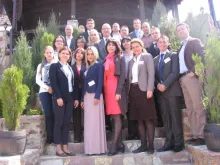
The seminar with a title "lnsurance as a method for Disaster Risk Reduction in SEE"seminar was held on 23 - 24 April 2013 at hotel “Manastir”, Berovo, Macedonia. The seminar was hosted by the Macedonian Protection and Rescue Directorate and was organized in cooperation with the National Insurance Supervisory Agency of Macedonia under the framework of the DPPI SEE Disaster Management Training Programme (DMTP) 2013.
The main objective of the seminar was to share information and discuss the current status of disaster insurance in the region of SEE, including the recommendations for further improvements of the use of disaster insurance in the SEE countries efforts to build disaster resilient communities.
The seminar was aimed for medium/ senior level disaster planners in addition to the representatives of the national agencies for insurance supervision. As part of the seminar two-day programme, the participants (DPPI SEE Parties’ representatives) also had an opportunity to deliver one fifteen-minute presentation on the seminar main topic.
Presentations:
- Disaster Risk Mitigation and Adaptation Project in Albania
- Mechanism of Government Funding in case of Disasters and the Insurance as an additional alternative in Bulgaria
- Disaster Risk Reduction - General concepts
- Europa Re Value Proposition
- The need for insurance against catastrophic risks
- Critical infrastructure protection
- Coping with the financial impact of disasters: a micro-perspective 1
- Coping with the financial impact of disasters: a macro-perspective (RPoulter2 - The Macro Perspective)
- National Presentation Republic of Serbia
- Slovenian System of Protection against Natural and other Disasters
- Disaster insuriance in Turkey
More information on the course and programme of the seminar is available in the Report on the event.
The language of the seminar was English and no translation was provided.
-
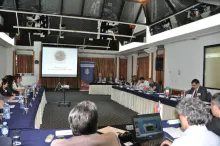

The seminar on “International Cooperation in Case of Emergencies – Host Nation Support”, hosted by the Sector for Emergency Management of the Ministry of Interior of the Republic of Serbia, represents Serbian contribution to the DPPI SEE Disaster Management Training Programme for 2015.
In recent years the region of the South Eastern Europe has witnessed a major growth in the scale and frequency of natural disasters which from the onset emphasized the importance of a rapid and effective response, including of a well-coordinated reception of requested international assistance and distribution of the humanitarian aid to the affected population.
 Under the seminar’s main topic, civil protection authorities and experts, as well as competent representatives of other stakeholders organisations engaged in the overall support to the government in the HNS, shared their national experiences in sending and receiving international assistance, including about the on-going processes to review the countries’ domestic frameworks for international response while outlining their legally binding frameworks for international disaster response operations.
Also shared experience in provision of HNS was that of Italy through presentation of the Italian Civil Protection Department representative. At the end of the seminar, conclusions and recommendations were drafted by a host.